
What is Cat Flu?
Cat flu is the general name given to a viral infection of the upper respiratory tract in cats. It is a common disease in cats and although not usually fatal in previously healthy adult cats it can cause death in kittens and immuno-suppressed older cats
Cat flu is most commonly caused by the Feline Herpes Virus-1 (FHV-1), or Feline Calicivirus (FCV)
Feline Herpes Virus is the more serious of the two. It is also known as Feline Virus Rhinotracheitis which is an older term for the virus.
Feline Herpes virus infects the membranes of the eyes, the lining of the nose, pharynx, sinuses, and throat.
Cat flu in general is a very contagious disease and can spread quickly from cat to cat.
Cat Flu: The most common symptoms of a Feline Herpes Virus infection are:
The Eyes:
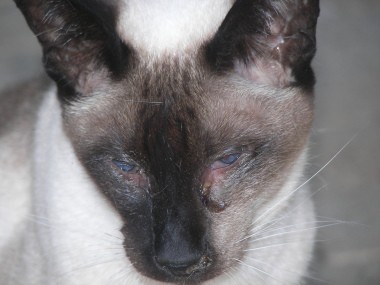
The virus affects the membranes of the eyes. (Conjunctivitis) The eyes are swollen and red with a discharge that is often filled with pus when secondary bacterial infection invade.
Sometimes the cat may develop corneal ulcers.
The Nose:
Sneezing is one of the most common symptoms. The nasal linings are inflamed (Rhinitis) There is a discharge from the nose which begins as a clear fluid. The discharge then turns thick and green as the disease progresses. Cats can often lose their sense of smell.
Fever and Depression & Loss of Appetite:
Often the cat runs a fever and generally feels unwell. Cats will often lose their appetite and sometimes become dehydrated. Although they are dehydrated they may refuse to drink water.
Pregnancy:
Often a pregnant cat will abort the kittens if infected with Feline Herpes Virus. If the kittens are born it is almost certain that they will catch the infection from the mother.
Cat Flu: What are the signs? The most common symptoms of Feline Calicivirus (FCV)
The Mouth and Tongue:
The most common symptom of Feline Calicivirus is ulceration of the mouth and tongue, palate, lips and sometimes the tip of the nose. The gums can also be affected by gingivitis.
Drooling can occur depending on the severity of the mouth ulcers.
The Nose and Eyes:
The calicivirus causes cold like symptoms which result in runny nose and eyes. The infection can affect the membranes of the eye but does not cause eye ulcers.
Fever and Depression:
The cat may or may not have a fever. Loss of appetite may occur but it is more common that the cat finds it too painful to eat because of the mouth ulcers. The infection becomes more serious when secondary bacterial infections like pneumonia invade.
The Joints:
Joint pain can occur and you may notice your cat limping. FCV has been reported to cause a limping syndrome. The limping can affect first one leg and then another.
The Paws:
There are several strains of the calicivirus and one of those strains causes ulcers in the paws.
Diagnosis of Cat Flu
Diagnosis is made by your vet. Your vet will make this diagnosis based on symptoms and can have the diagnosis confirmed by taking a swab from your cat’s throat and sending it to the laboratory for testing.
Treatment of Cat Flu
Cat flu is seldom fatal in previously healthy cats. Infected cats will require intensive nursing and support. Kittens are more at risk from cat flu than adult cats.
There is no cure for a viral infection however the cat can be kept as comfortable as possible by keeping it warm and treating the symptoms. Your vet may prescribe eye drops or ointment for the conjunctivitis,
Corneal ulcers must be examined by your vet who will recommend appropriate treatment.
Discharging eyes and nose should be bathed frequently with warm salty water.
Secondary bacterial infection can be treated by your vet with antibiotics.
Mouth ulcers can be severe and cause your cat to stop eating. Your vet needs to be consulted if your cat has stopped eating and drinking. Sometimes the cat has to be hospitalized and force fed because the mouth ulcers are so painful the cat refuses to eat.
Dehydrated cats may need to be put on intravenous fluids and this will require spending a day or two in hospital.
If the cat has lost it’s sense of smell it will lose interest in it’s food. Encourage your cat to eat by offering it strongly smelling food such as sardines.
How is Feline Herpes Virus and Feline Calicivirus spread?
Infected cats should be kept isolated from other cats
The virus spreads from cat to cat contact and with contact from the discharge from the nose and eyes. It can also spread from the cat sneezing much the same way a cold is spread in humans.
The virus can live outside the cat’s body for a period of time and so infection can be transmitted via bowls, bedding, cages or in fact anything your cat comes into contact with. You can also spread the virus yourself from one cat to another on your hands or on your clothing.
The Herpes Virus can live outside the cat’s body for approximately 24 hours but the Calicivirus can survive much longer sometimes for up to 7 – 10 days
Household bleach mixed at a ratio of 1:32 is a inexpensive and effective way of destroying the virus on washable items.
Cat flu cannot be spread to humans.
How long does Cat Flu last?
Feline Herpes Virus symptoms usually lasts for about 7 -14 days and Calicivirus symptoms usually last for about 7 – 10 days.
Will my cat be a carrier of Cat Flu?
When cats have recovered from Cat Flu they continue to shed the virus especially at times of stress. Although they do not show any symptoms they have in fact become a carrier of the virus.
With Feline Herpes Virus the carrier state can last the lifetime of the cat.
With Feline Calicivirus the carrier state lasts for at least one month after infection. Over half of infected cats eliminate the virus after 2-3 months and most cats do eliminate it completely after 18 months.
How can I prevent Cat Flu
There are vaccinations available for Feline Herpes Virus-1 and Feline Calicivirus (FCV) Discuss a vaccination regime with your veterinarian.